This week's key reading: A Significant Cognitive Artifact of Contemporary Youth Culture
Authors: Henderson, L. http://www.digra.org/dl/db/06276.11341.pdf
Relevance to field: While not specific to adults (as seems to be the case from almost all research in this are), this article documents profound advantages to the use of video games on children, using their cognitive properties to enhance their learning skills
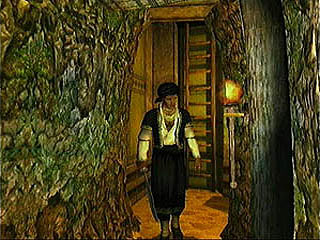
What is known about the field: It is made known that video games are generally looked down on as useful educational tools early in the paper, and seeks to disprove this by using a real commercially released game, Final Fantasy IX. The author took five students, each of differing "teacher-rated" ability, and observed and interviewed them as they played through the quest. To her surprise, the author found that many of the cognitive learning skills that were known to result from playing video games were put in play by all the students, regardless of academic ability. It makes known that it isn't just specific educational games fostering these abilities, but also those already on the market
What's missing: Admittedly, testing 5 students is a fairly small observation pool to draw many conclusive results from. It is also curious that of these 5, only 1 is female (resulting in skewed data). This seems to ignore the differences between girls and boys in play, as well as not having sufficient female representation to present conclusive results for her female student "Eyore". She also puts forward at the end that similar tests should be run on multiple age groups.
Comments: A lot of research has been carried out on theoretical games or on small demos. The author has instead chosen a commercially available and successful title as the basis for her research. This instantly gives her fair more relevance to study of serious games and the thought processes they evoke.
Thursday, August 21, 2008

Thursday, August 14, 2008
This week's reading: Cognitive Science and Serious Games
I knew I'd one day come back to this blog. This blog is now converted into a research blog across the duration of my honour's project.
This week's key reading: Cognitive Science Implications for Enhancing Training Effectiveness in a Serious Gaming Context
Authors: Greitzer, F., Kuchar, O., Huston, K.
Relevance to field: The authors note that current attempts to use electronic means for training are very limited and unfruitful, with many people not remembering key things from these simulations. They put forward that the characteristics of video games, such as well balanced cognitive loading, visceral appeal and ability to "stimulate semantic knowledge". They show this by running a test of a serious network game called CyberCIEGE at a certain firm. The results were that employees were much sooner working through "hard" situations with much less difficulty. However, they expressed frustration due to what is described as a poorly communicated tutorial.
What is known about the field: The paper starts with a detailed explanation of the cognitive advantage presented in serious games, as well as detailing limitations in current training software. The authors and staff seem to be fully aware of the advantages of video games as in instructional tool, and thoroughly believe in its strong psychological effects
What's missing: It is unusual that Greitzer et al begin their discussion of cognitive advantages by making specific reference to the effect of games on children and youth, without explicitly stating that the effects carry over into their much older testing demographic. They also surmise that there were several key tools employed by successful games which would be of use in a serious game context, such as levelling up and shared experience, which would aid the teaching process
Comments: This article is a brilliant example of research in the field done correctly. The fact they could cite a recent example with a well thought-out and detailed execution easily puts it above other papers as an excellent source.
This week's key reading: Cognitive Science Implications for Enhancing Training Effectiveness in a Serious Gaming Context
Authors: Greitzer, F., Kuchar, O., Huston, K.
Relevance to field: The authors note that current attempts to use electronic means for training are very limited and unfruitful, with many people not remembering key things from these simulations. They put forward that the characteristics of video games, such as well balanced cognitive loading, visceral appeal and ability to "stimulate semantic knowledge". They show this by running a test of a serious network game called CyberCIEGE at a certain firm. The results were that employees were much sooner working through "hard" situations with much less difficulty. However, they expressed frustration due to what is described as a poorly communicated tutorial.
What is known about the field: The paper starts with a detailed explanation of the cognitive advantage presented in serious games, as well as detailing limitations in current training software. The authors and staff seem to be fully aware of the advantages of video games as in instructional tool, and thoroughly believe in its strong psychological effects
What's missing: It is unusual that Greitzer et al begin their discussion of cognitive advantages by making specific reference to the effect of games on children and youth, without explicitly stating that the effects carry over into their much older testing demographic. They also surmise that there were several key tools employed by successful games which would be of use in a serious game context, such as levelling up and shared experience, which would aid the teaching process
Comments: This article is a brilliant example of research in the field done correctly. The fact they could cite a recent example with a well thought-out and detailed execution easily puts it above other papers as an excellent source.
Thursday, May 29, 2008
So, there we have it

Wow. There you have it. 36 posts, over 15000 words, 13 weeks, multiple game ideas, lots of analysis, and too many Cokes to appropriate later, and we have a complete design journal. I thought my "last" one should probably wrap up, as I feel like it's been somewhat of an epic journey.
I've actually found this journaling process incredibly helpful for getting a grasp on the lecture content in ITN016. And I'm not trying to say this to appeal to the markers. I really have. I mean, learning about design concepts has been interesting, but I've found their use and importance by actually examining games in the industry against them.
It's also forced me to have to come up with my own game ideas. This has been great cause, while course co-ordinators invite you to think about your own ideas in your spare time, the truth is that.. you don't really get much opportunity to. Not only that, it's forced me to actually assess these ideas. Not just having ideas for the sake of ideas, but having some ideas that are actually soundly justified by tested design principles.
So, key findings:
- Designers abuse gamers - in difficulty, in interface use... and maybe not so much in terms of narrative and affect
- The tried and true methods are often your best bet - a lot of areas *could* be innovated in order to move the industry forward even further, but it's probably best for the moment they aren't ie. FPS interfaces, implicit vs. explicit challenge balances
- Games are a good medium for people to grow - whether this is by assaulting players memorisation ability and requiring superhuman ability, or by bringing them further along in their own lives
- Designing games is HARD - or harder than I initially thought: there are no guarantees what you come up with will sell, and the processes you have to implement to get there are actually quite involved
I know that game developers have probably known these for years, but it's good to have the revelation of these for myself.
I may even continue this blog in the near future. It sure has been useful for creating good game ideas. And while it may not always have an ITN016 lecture to go by, it sure will be focussed on finding new and innovative ways to revolutionise, or at least increment, the gaming medium.
Watch this space.
Alas, the tormented soul
I can't seem to escape this notion that designers are mean to gamers. They clearly are. I swear they are. Or maybe I just have some sort of deep, repressed hurt from the times that these games broke my heart so... Alas, my secret misery is now revealed.
But it just occurred to me that some things which could severely mess up a group of players emotionally could also be what inspires or engages another set of gamers. It seems that the perceptions gamers may bring into their experiences may have severe consequences on how they are affected, or how they allow themselves to be affected, by a particular gameplay segment.
The problem is choice, Neo.
In Knights of the Old Republic, you are given an extensive list of options as to how your character behaves, and a branching story that follows along depending on how you've acted. **SPOILERS** In a significant part of the dark side end-game, you are given the option of how to treat your party after you have fallen to the ways of the Sith. You are given the rather cruel option to turn one of your life-bound companions on his life-time friend and have her killed. When he refuses, you are then given the option to kill them both. It is a pretty high impact decision, after spending 20+ hours in the company of these characters. For some, it may have had them wishing they never said yes to Bastilla and her dark side ways. For others, it may highlight the new-found power and authority of their twisted dark lord. ***END SPOILERS***
I haven't played Half-Life 2 Episode Two yet, but I have played all the titles before it. So when I saw a link on GameTrailers to watch its ending, I couldn't help but click. And omigolly. An incredibly significant, albeit innocent character is shockingly killed off in the presence of family... then the game ends. When I saw it, I actually felt quite ripped off and it's sort of put me off getting the game. My mate Dan, on the other hand, said it was quite a good cliffhanger and would lead in well to the next game. The level to which we involved ourself in the game obviously came out.
And don't get started on Final Fantasy VII. When I see Aeris die, it just makes me remember all the parodies. "And remember, phoenix downs don't always work... I'M LOOKING AT YOU, AERIS!". But there are enough records of people breaking down in tears in that segment of the game to show that the game had some serious affect on people... or that they were just too attached to the game.

Well, there's an evident design question: How do you design so that people view your high impact, emotional scenes in the right light? Well the obvious answer, it seems, is you can't. You can't design for everyone, sometimes not even for yourself. But you can pick up trends and strategies used by others, in games and in other media, for touching the emotions of a particular market. Otherwise, it seems to be a large waste of time and money. Besides, if you can hit most people, it's usually described as a success. Here here, Mr. Uematsu!
Ok ok, so I'll admit it - gamers probably aren't as tortured as I've made them out to be. I guess when the Universal Survey of All Gamers is run*, we will finally know.
*May or may not be a Universal Survey of All Gamers, any likeness to a real survey is mostly coincidental
But it just occurred to me that some things which could severely mess up a group of players emotionally could also be what inspires or engages another set of gamers. It seems that the perceptions gamers may bring into their experiences may have severe consequences on how they are affected, or how they allow themselves to be affected, by a particular gameplay segment.
The problem is choice, Neo.
In Knights of the Old Republic, you are given an extensive list of options as to how your character behaves, and a branching story that follows along depending on how you've acted. **SPOILERS** In a significant part of the dark side end-game, you are given the option of how to treat your party after you have fallen to the ways of the Sith. You are given the rather cruel option to turn one of your life-bound companions on his life-time friend and have her killed. When he refuses, you are then given the option to kill them both. It is a pretty high impact decision, after spending 20+ hours in the company of these characters. For some, it may have had them wishing they never said yes to Bastilla and her dark side ways. For others, it may highlight the new-found power and authority of their twisted dark lord. ***END SPOILERS***
I haven't played Half-Life 2 Episode Two yet, but I have played all the titles before it. So when I saw a link on GameTrailers to watch its ending, I couldn't help but click. And omigolly. An incredibly significant, albeit innocent character is shockingly killed off in the presence of family... then the game ends. When I saw it, I actually felt quite ripped off and it's sort of put me off getting the game. My mate Dan, on the other hand, said it was quite a good cliffhanger and would lead in well to the next game. The level to which we involved ourself in the game obviously came out.
And don't get started on Final Fantasy VII. When I see Aeris die, it just makes me remember all the parodies. "And remember, phoenix downs don't always work... I'M LOOKING AT YOU, AERIS!". But there are enough records of people breaking down in tears in that segment of the game to show that the game had some serious affect on people... or that they were just too attached to the game.
Well, there's an evident design question: How do you design so that people view your high impact, emotional scenes in the right light? Well the obvious answer, it seems, is you can't. You can't design for everyone, sometimes not even for yourself. But you can pick up trends and strategies used by others, in games and in other media, for touching the emotions of a particular market. Otherwise, it seems to be a large waste of time and money. Besides, if you can hit most people, it's usually described as a success. Here here, Mr. Uematsu!
Ok ok, so I'll admit it - gamers probably aren't as tortured as I've made them out to be. I guess when the Universal Survey of All Gamers is run*, we will finally know.
*May or may not be a Universal Survey of All Gamers, any likeness to a real survey is mostly coincidental
What are you implying?
Lately I've been getting into the Nintendo 64 Zelda games again. What great games. They're absolutely fantastic. Great quest and level design, fun controls, excellent reward system, wonderful score etc. The list goes on on reams of paper that clearly aren't fair for the humble rainforests.
Zelda is a really great series for showing the power of balance between implicit and explicit challenges. Combat, for instance, is always very explicit. There are icons on the screen clearly showing what button will initiate a jumping attack or a sword swing, as well as others corresponding to arrows or bombs. If that isn't specific enough for you, there's even the option to listening to advice from your fairy about exactly how to kill this beast. This is offset with a remarkable quest system: a spelled out critical path; some other quests which are largely hinted at, but not forced; and a whole load of quests which aren't even required, or eluded to, unless you go looking for them.
I wonder what would happen if all of those optional quests were suddenly spelled out in great detail during the game. Oh yes, that's right.

Runescape would happen. Every single quest you can possibly do is explicitly implied... explicitly implied? Well yeah, the quests are completely spelt out; then again, they aren't exactly forced. Perhaps it is more useful to the target market for Runescape, which could be a bit hard to gauge since it is an MMO spread largely by word of mouth (or at least that's how I heard about it). From the community I was in back in those dark days of playing it, I can remember a fairly strong early-teen contingent. Then again, Zelda has a similar target market, albeit those owning consoles.
How can a perfect balance be determined? Guess this is another example of people not straying far from the tried and true. Perhaps it would be perilous to even try. And yes, of course we're gonna try it for a moment.
Most current games follow the formula "explicit combat, explicit critical path, implicit sub-quests". What I was thinking is, what if you implied the critical path? What if it wasn't forced? What if the player had to actively go look for what they actually had to do in the game, rather than being spoon-fed by annoying "HEY! LISTEN!" or by extensive quest logs?
On the plus side, it would be a new experience for players. I can't think of a game that has you doing something like this. Actually, that's not true. There are some games where reviewers complained about "wandering around for hours, trying to find out what you actually have to do next". Perhaps players don't have the attention span or the motivation to have to search out their main objective.
Maybe if other things were made explicit in its place, like.......................................................... optional quests? Hmmm, maybe not the best way of going about it. Well I can't say that either, cause it hasn't actually been tried. If the earliest part of the critical path was made explicit (and was an absolutely AWESOME experience), then perhaps this wouldn't be so bad? Once again, unconfirmed, and in desperate need of an attempt.
And so it seems, the tried and true is once again the winner. Not necessarily a bad thing, but if a solid innovation is made in this area, we could be on to some good game sales...
Zelda is a really great series for showing the power of balance between implicit and explicit challenges. Combat, for instance, is always very explicit. There are icons on the screen clearly showing what button will initiate a jumping attack or a sword swing, as well as others corresponding to arrows or bombs. If that isn't specific enough for you, there's even the option to listening to advice from your fairy about exactly how to kill this beast. This is offset with a remarkable quest system: a spelled out critical path; some other quests which are largely hinted at, but not forced; and a whole load of quests which aren't even required, or eluded to, unless you go looking for them.
I wonder what would happen if all of those optional quests were suddenly spelled out in great detail during the game. Oh yes, that's right.
Runescape would happen. Every single quest you can possibly do is explicitly implied... explicitly implied? Well yeah, the quests are completely spelt out; then again, they aren't exactly forced. Perhaps it is more useful to the target market for Runescape, which could be a bit hard to gauge since it is an MMO spread largely by word of mouth (or at least that's how I heard about it). From the community I was in back in those dark days of playing it, I can remember a fairly strong early-teen contingent. Then again, Zelda has a similar target market, albeit those owning consoles.
How can a perfect balance be determined? Guess this is another example of people not straying far from the tried and true. Perhaps it would be perilous to even try. And yes, of course we're gonna try it for a moment.
Most current games follow the formula "explicit combat, explicit critical path, implicit sub-quests". What I was thinking is, what if you implied the critical path? What if it wasn't forced? What if the player had to actively go look for what they actually had to do in the game, rather than being spoon-fed by annoying "HEY! LISTEN!" or by extensive quest logs?
On the plus side, it would be a new experience for players. I can't think of a game that has you doing something like this. Actually, that's not true. There are some games where reviewers complained about "wandering around for hours, trying to find out what you actually have to do next". Perhaps players don't have the attention span or the motivation to have to search out their main objective.
Maybe if other things were made explicit in its place, like.......................................................... optional quests? Hmmm, maybe not the best way of going about it. Well I can't say that either, cause it hasn't actually been tried. If the earliest part of the critical path was made explicit (and was an absolutely AWESOME experience), then perhaps this wouldn't be so bad? Once again, unconfirmed, and in desperate need of an attempt.
And so it seems, the tried and true is once again the winner. Not necessarily a bad thing, but if a solid innovation is made in this area, we could be on to some good game sales...
Even more gamer abuse
I've done a couple of posts stating that producers who abuse their target market sell well. And I still maintain it's true. Just looking over some of the key design principles Peta put forward in the interface lecture, and I'm so reminded of all the games that abuse players, not just by difficulty, not just by challenge hierarchy, but by exploiting the interface to no end. Usually this is done in the audiovisual, via senses, but is also done in other ways.
Instant example is Eternal Darkness. The game's whole point is to mess with the player. As typical of survival horror games, you are always being bombarded with a constant barrage of downcast yet frantic music to instill fear. You're being hunted quite a bit. And then, this is where the game just gets amazing... you have a sanity meter, which measures how sane your avatar currently is. When this bar starts to go down, all sorts of crazy stuff happens. Your head will randomly fall off. A TV volume bar will appear on screen and mute the TV on you, like someone was turning it down using the remote. The interface will turn to static. Absolute madness. A perfect example of a game abusing the player via the interface to induce emotions of fear and panic.
A lot of multiplayer games will enable players to use the interface of their opponent to effect their ability to play the game, and some are quite mean. I think of how, in Guitar Hero battles, you are able to reverse the opposing player's dexterity orientation (ie. make a right-handed player use the left-handed interface, and vice versa). I *hate* it when this happens to me. Or the flashbang grenade in Counter-Strike or Operation Flashpoint. It completely blinds the player's character, and an instant white screen with a high-pitched wail is also annoying. I know it's to capture the "realism" of a flashbang, but that doesn't escape the fact it's sense-abuse.
You've gotta admit, developers must have some excellent recruiting processes to find the genii that come up with this sort of stuff. Absolutely remarkable.
But once again, this is an example of where players are tortured to some extent, in order to create a fun experience. I think, perhaps, the tolerance of players to this sort of thing is quite a bit higher than we have been led to believe. And these are just the most popular games. There is an interesting flash game I played that makes the player wander through a maze. I think it was called Disorientation. The premise sounds easy enough, right? But then it reverses the orientation of the controls, shuns you with motion blur, and gives you a moving floor to work with, all in increasing levels as you go through the game. Sheer madness.
Player abuse. Don't report it. Be a capitalist and make money off it. Seems to have worked for so many companies, and I'm sure there'll be more to come.
Instant example is Eternal Darkness. The game's whole point is to mess with the player. As typical of survival horror games, you are always being bombarded with a constant barrage of downcast yet frantic music to instill fear. You're being hunted quite a bit. And then, this is where the game just gets amazing... you have a sanity meter, which measures how sane your avatar currently is. When this bar starts to go down, all sorts of crazy stuff happens. Your head will randomly fall off. A TV volume bar will appear on screen and mute the TV on you, like someone was turning it down using the remote. The interface will turn to static. Absolute madness. A perfect example of a game abusing the player via the interface to induce emotions of fear and panic.
A lot of multiplayer games will enable players to use the interface of their opponent to effect their ability to play the game, and some are quite mean. I think of how, in Guitar Hero battles, you are able to reverse the opposing player's dexterity orientation (ie. make a right-handed player use the left-handed interface, and vice versa). I *hate* it when this happens to me. Or the flashbang grenade in Counter-Strike or Operation Flashpoint. It completely blinds the player's character, and an instant white screen with a high-pitched wail is also annoying. I know it's to capture the "realism" of a flashbang, but that doesn't escape the fact it's sense-abuse.
You've gotta admit, developers must have some excellent recruiting processes to find the genii that come up with this sort of stuff. Absolutely remarkable.
But once again, this is an example of where players are tortured to some extent, in order to create a fun experience. I think, perhaps, the tolerance of players to this sort of thing is quite a bit higher than we have been led to believe. And these are just the most popular games. There is an interesting flash game I played that makes the player wander through a maze. I think it was called Disorientation. The premise sounds easy enough, right? But then it reverses the orientation of the controls, shuns you with motion blur, and gives you a moving floor to work with, all in increasing levels as you go through the game. Sheer madness.
Player abuse. Don't report it. Be a capitalist and make money off it. Seems to have worked for so many companies, and I'm sure there'll be more to come.
My place in this woooooooorld
Ignorance is bliss, they say. Perhaps this has been my greatest source of uncertainty in our group experience. Uncertainty that our game ideas are actually *good*. And fun. These things which are potentially impossible to assess are required to be assessed during the design process. *Sigh*. The joys of entertainment.
And actually, it has been. I have actually really enjoyed working in a group to create a game idea, and then implement it. I won't go into the details of what I've already said I've gotten out of it, rather, I should probably mention what I actually ended up doing in the team.
As I have mentioned before, I was a bit of a jokester, but I also wanted to get all the work done. I would find myself constantly going over the lecture content in my mind during our group meetings, and ensuring nothing we were talking about was devoid of the key words, like "critical path" or "starting condition". That seemed to have served us well, if our marks for our design document are anything to go by.
On the topic of the design document, I was charged with the creation of the lengthy mechanics section. Admittedly, once I was halfway through it (standing at about the 6 page mark), I was thinking I shouldn't have picked the biggest section. Once I pushed out of that mindset, I found that it was actually quite a bit easier to think about design principles than I initially made out. There was just so much depth to what conflict actually was and how it took place, the intricacy of the rules, and the idiosyncrasies of game balance.
I'd like to view myself as the token nerd of our group. Before starting some key meetings, Tristan, Dan and I would sit and talk for about an hour about the games we really enjoyed and the ones we're looking forward to. 10 minutes in, two things were obvious: I'm an extreme Nintendrone, and I know too many games for my own good.
Actually, that isn't fair to say. It seems that my "past experiences with so many games", also known as my extreme nerdiness, has served me well in this unit and in this degree at large. I guess it makes sense: if you were doing film and TV, you'd have to be familiar with a LOT of movies, so one working in the games industry should do likewise with games.
Overall, a highly enjoyable group experience. I look forward to working in similar environments when I start work in the near future.
And actually, it has been. I have actually really enjoyed working in a group to create a game idea, and then implement it. I won't go into the details of what I've already said I've gotten out of it, rather, I should probably mention what I actually ended up doing in the team.
As I have mentioned before, I was a bit of a jokester, but I also wanted to get all the work done. I would find myself constantly going over the lecture content in my mind during our group meetings, and ensuring nothing we were talking about was devoid of the key words, like "critical path" or "starting condition". That seemed to have served us well, if our marks for our design document are anything to go by.
On the topic of the design document, I was charged with the creation of the lengthy mechanics section. Admittedly, once I was halfway through it (standing at about the 6 page mark), I was thinking I shouldn't have picked the biggest section. Once I pushed out of that mindset, I found that it was actually quite a bit easier to think about design principles than I initially made out. There was just so much depth to what conflict actually was and how it took place, the intricacy of the rules, and the idiosyncrasies of game balance.
I'd like to view myself as the token nerd of our group. Before starting some key meetings, Tristan, Dan and I would sit and talk for about an hour about the games we really enjoyed and the ones we're looking forward to. 10 minutes in, two things were obvious: I'm an extreme Nintendrone, and I know too many games for my own good.
Actually, that isn't fair to say. It seems that my "past experiences with so many games", also known as my extreme nerdiness, has served me well in this unit and in this degree at large. I guess it makes sense: if you were doing film and TV, you'd have to be familiar with a LOT of movies, so one working in the games industry should do likewise with games.
Overall, a highly enjoyable group experience. I look forward to working in similar environments when I start work in the near future.
Subscribe to:
Posts (Atom)
